
Sakhmet Solitaire 2
What is Sakhmet Solitaire 2?
Sakhmet Solitaire 2 is the second installment of the original Sakhmet Solitaire based in the Lost Desert. It is similar to the classic game of Solitaire. Sakhmet Solitaire 2 released on November 24th, 2025 as an HTML5 game rather than a clickable game like the first game.
Since this is a site feature that gives out neopoint rewards and prizes, you may not play Sakhmet Solitaire II on your side accounts. For more information look at our side accounts guide.
How to Play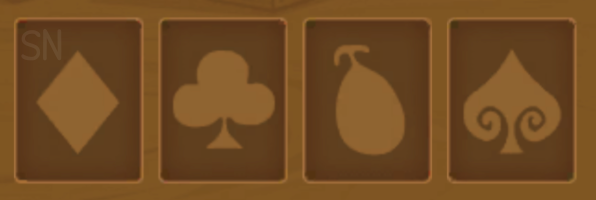
This game is very similar to the classic game of Solitaire. The purpose of the game is to eliminate as many cards as possible from the bottom gameboard and have them in rank order (lower to higher) at the top left foundation pile. There are a total of two colors (red and black) and four different suits shown at the foundation pile area: diamonds, clubs, neggs and spades. To move a card, you can either tap the card and it will move to the best possible play, or you can drag the card to where you want.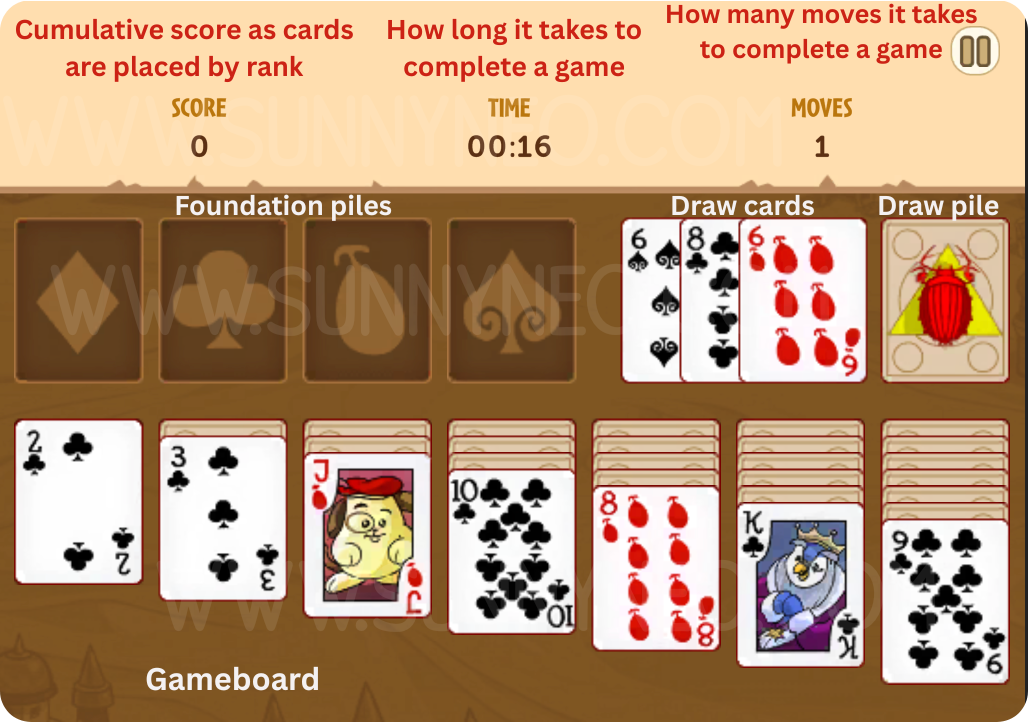
Getting Started
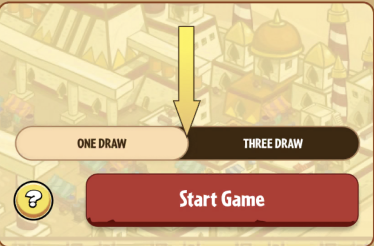
Once the game is loaded, you can choose between having a one draw or three draw. The one draw will draw one card at a time until it reaches three, allowing you to use all cards that have been drawn. If choosing the three draw, it will be a bit more challenging where you have to use each card to get to the one closest to the foundation piles.
Placing
 Cards
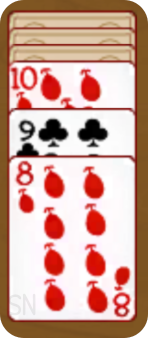
CardsOnce you click start game, you are taken to the full board game. The timer does not start until you successfully move a card or click the draw pile. In order to complete your goal of getting all cards flipped over and ranked on the foundation pile, you need to stack them into 2-part patterned columns in number order from largest to smallest numbers. That means the top most card of the column will be the highest number of that column and the bottom most of the same column will be lowest number. These patterned columns is the main strategy of bringing all cards together to later move towards the foundation pile. Placing a card into a patterned column earns you
5 points .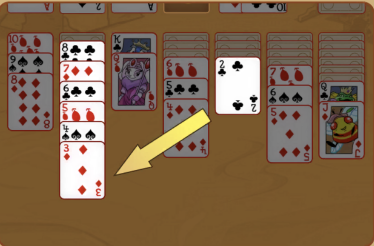
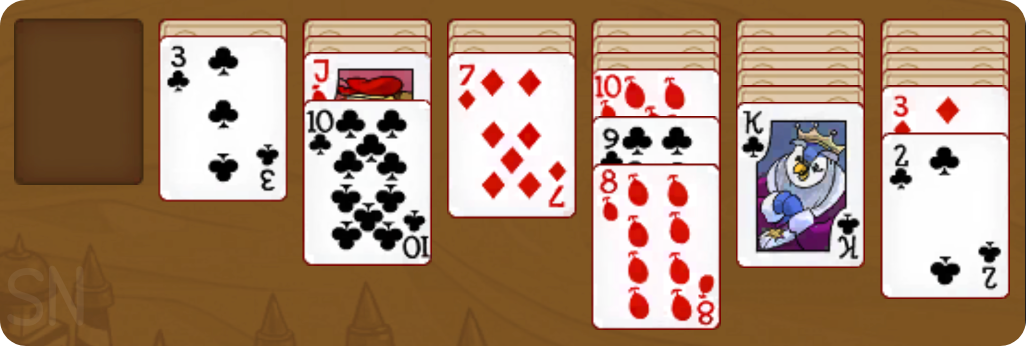
As inactive cards are flipped over and moved, there is a chance to have no cards visible in a column. The only card that can enter a blank column is the King. It can be of any suit. So in the case of the example below, the King of Spades is the only card to go to that blank space. If there were more than one King, you get to choose which one you think is strategically the best choice.
Foundation Piles
After creating patterned columns, it will be easier to flip over inactive cards and move them towards the foundation pile. Once you've made your piles, you can begin to add cards to the foundation pile by suit. For each card you add to the foundation pile, you earn
15 points . You can add cards to the foundation pile at any time. The foundation pile is not permanent like the first version of Sakhmet Solitaire and other Solitaire games alike. You can remove and put back cards from the foundation piles.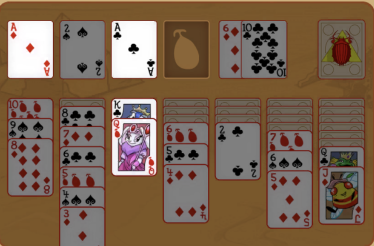
Scores & Time
Scores are given for every move you make-- whether it is creating patterned columns by moving cards from the draw pile or gameboard, or adding cards to the foundation pile. Different moves earn a different number of points. Moving cards around the board game or to grab cards from the draw pile to create patterned columns earns you
5 points . Adding cards to the foundation pile earns you 15 points . You can also lose 5 points if you bring out a card from the foundation pile and back on the game board. (For example: 15 points is removed for putting the card back on the gaming board and when you place the same card back, you only get 10 points for it, losing a total of 5 points.) You can also earn specific number of points dependent on timing and how many moves you are able to make. All scores are accumulated throughout the game.At the end of the game, there are bonus points that can be earned. For finishing a game completely, you can earn
300 points on top of your score. For time bonus, you can earn up to 1,000 points and for move bonus, you can earn up to 100 points . 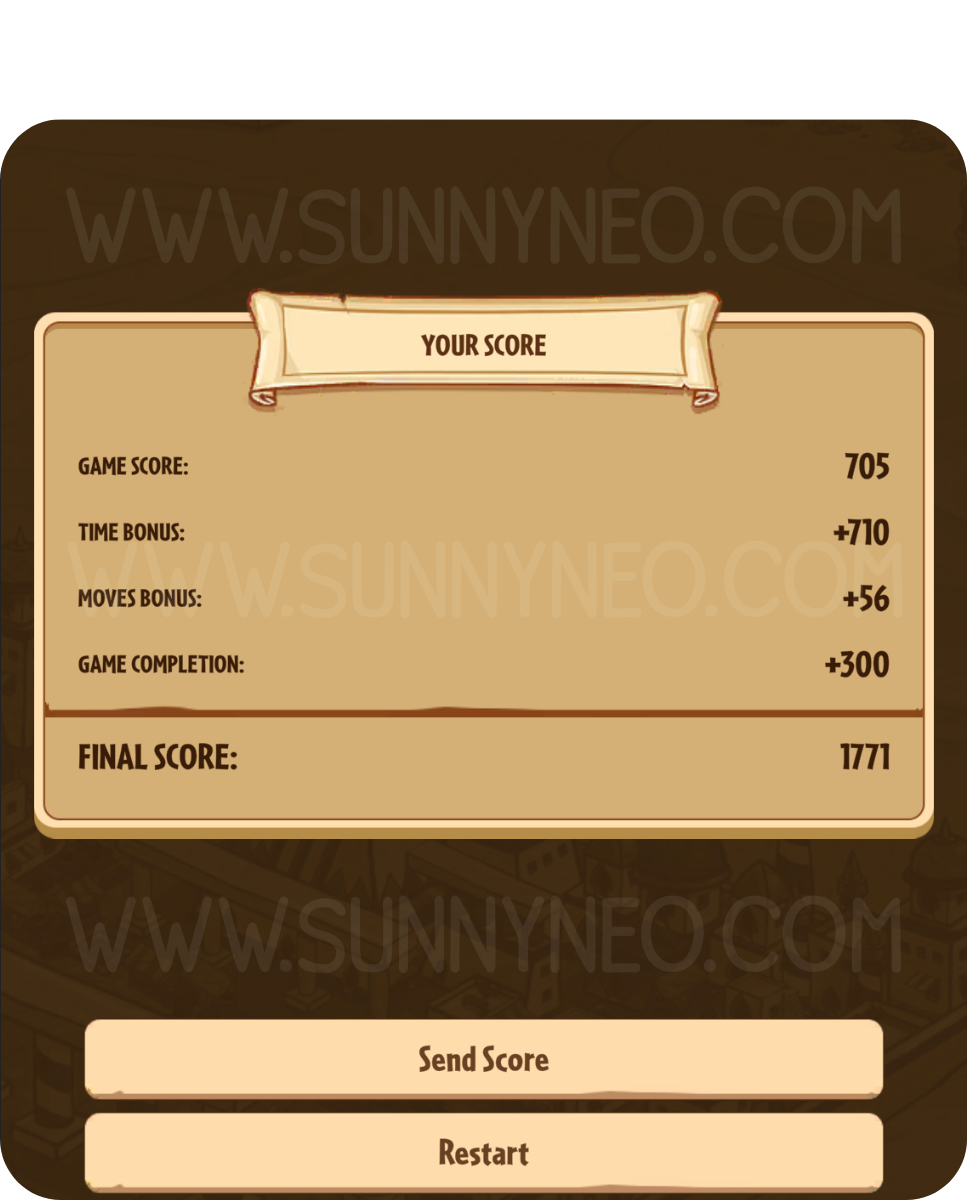
Undo
A new feature from the original Sakhmet Solitaire to this one is that you can be able to undo your move. If you think you placed the card in the wrong spot, you can click a button located on the bottom of the game screen and it will allow you to redo that move. Redoing a move counts as a move. So if you're trying to have a specific number of moves for more points, be cautious that it will count as a move! Using the undo button does not make you lose any points. Also, be careful because right next to the undo button is the button to end the game.
Auto Complete
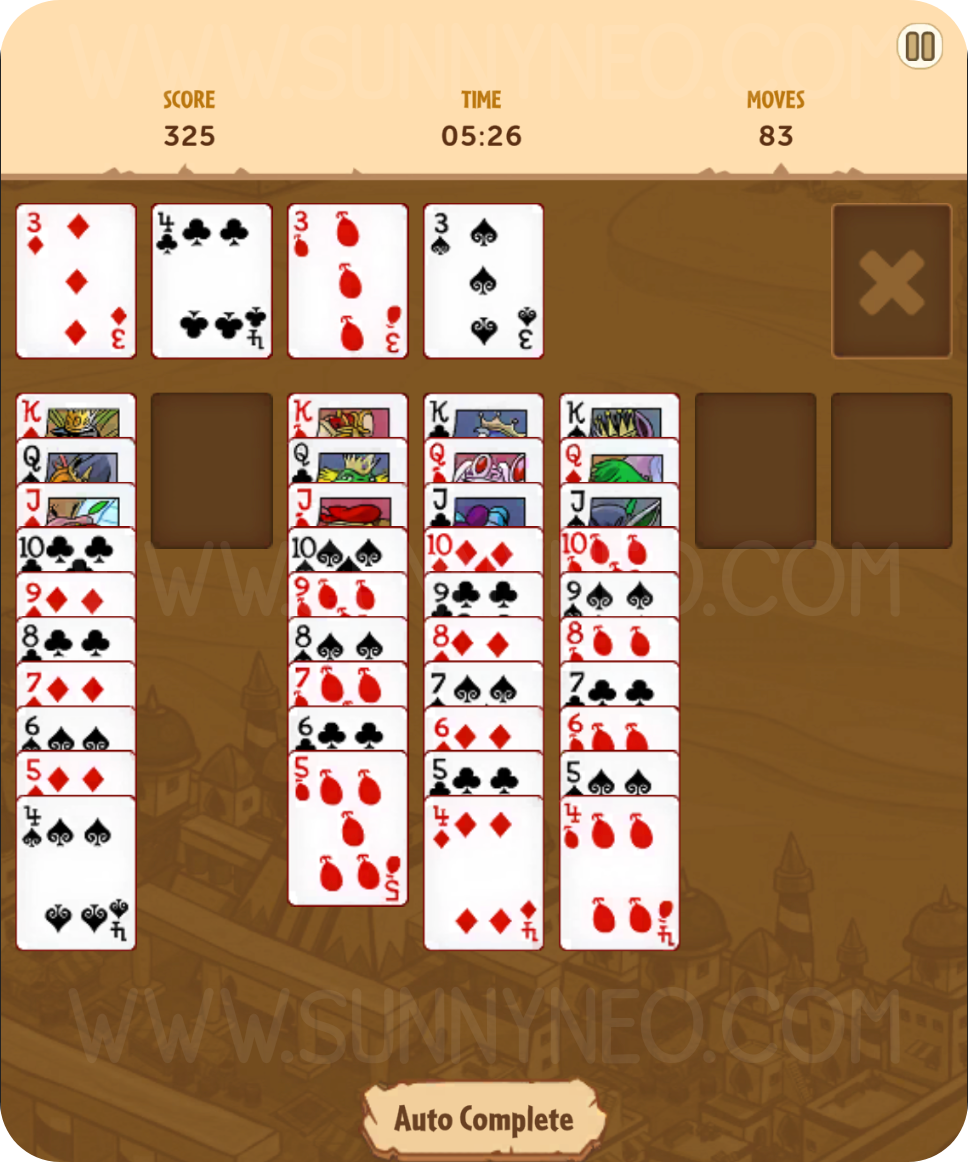
When all inactive cards and cards from the draw pile have been strategically put together in the patterned column, you'll see a new button on the bottom of the screen replacing the undo and end game buttons. The button, Auto Complete, will automatically move all cards from the game board and onto the pile foundation. Once done, the game is over and you win!
Strategies
There are a few known strategies of playing Solitaire, especially Sakhmet style.Keep it on the field
Play the cards on the playing field first before you use the cards in the draw pile. Begin using the draw pile if there are no available moves on your playing field.
Don't pile too soon
Keep your foundation piles even. For example, keep them all at 2's or 3's but don't have two sets be 5's and the other sets be 2's. In other words, try not to add card values to your foundation pile early because it is available. Use them to help maneuver cards around. If you place them on your foundation pile, you will not be able to use those cards throughout the game without losing points, which may not help grab cards from the playing field or draw pile.
Clear the field
Work your way through your playing field by flipping over inactive cards. The more you flip, the better it is in the end.
Deja-Vu of cards
When playing 3 cards per draw, you have three chances of seeing the same cards (if not played on the playing field). You can use this knowledge to determine what cards can be moved and what to look forward to when sequencing.
Difficulty of level
It is recommended to choose 3 cards per draw rather than 1 card per draw as you have a better chance at a draw pattern in 3 cards per draw than seeing the card once in 1 card per draw.

 {{ loadingMessage || 'Loading, one moment please'}}